

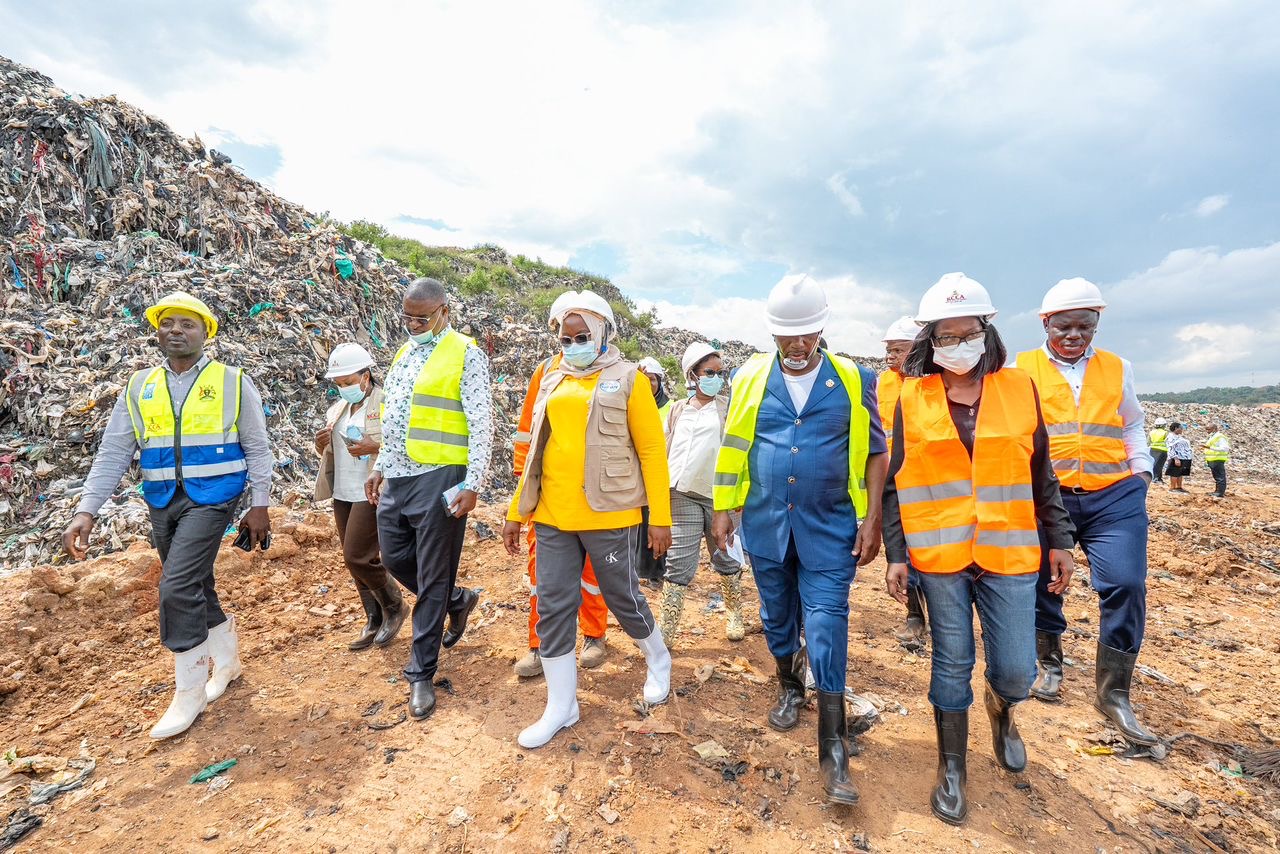
Lawmakers have raised concerns over persistent operational gaps in Kampala’s waste management system, warning that inadequate funding, limited equipment and growing waste volumes continue to undermine ongoing rehabilitation and expansion efforts.
Members of Parliament on the Presidential Affairs Committee made the remarks on Tuesday after visiting the Buyala Waste Management Facility and the Kiteezi landfill, which is still under rehabilitation following a partial collapse in August 2024.
The legislators said while progress has been recorded in infrastructure development and landfill recovery works, the pace of implementation remains constrained by resource limitations and the scale of waste generated in the city.
The committee, led by Alex Byarugaba Bakunda, said Parliament must support policies that complement Kampala Capital City Authority efforts, particularly addressing plastic waste.
“We need to reignite the conversation on single-use polythene bags, commonly known as buveera, because they are one of the biggest waste challenges in the country,” he said. “If we are to have proper garbage management and a clean environment, this issue must be handled decisively.”
At the center of the operational challenges is the pressure on KCCA’s waste handling capacity, which officials say is already overstretched by the city’s rising waste output.
KCCA Executive Director Sharifah Buzeki said the authority undertook due diligence before acquiring the 230-acre piece of land for the Buyala waste management facility.
However, she noted that key systems are still being developed or upgraded, including measurement and treatment infrastructure.
“We are constructing a weighing bridge so that we get the exact tonnage that comes in and how much is recovered,” Buzeki said.
She said waste composition in Kampala presents additional challenges, with more than 80 percent being organic material that generates large volumes of leachate requiring proper treatment.
“Over 80 percent of our garbage is organic and produces leachate, which we need to manage well before releasing it into the environment,” she said.
“We currently have four leachate ponds and are constructing a working cell to improve treatment.”
Despite these measures, KCCA continues to operate with limited logistics capacity. Buzeki said the Authority has 35 garbage trucks, a number she described as insufficient for the volume of waste generated in the city, alongside a shortage of heavy-duty equipment.
“We need about seven heavy-duty machines, but we are currently hiring three as we work to improve operations,” she said.
At the Kiteezi landfill, which is undergoing rehabilitation after the 2024 collapse, officials acknowledged that progress has been made but warned that completion depends heavily on funding availability.
“We have come here to show how we are decommissioning and rehabilitating this site. We have covered 16 acres out of 39, but we still have more to do, including clearing waste from land that does not belong to KCCA,” she said.
“If we get the funds as anticipated, we will be able to rehabilitate this place and make it better.”
She added that while works are ongoing, resource constraints continue to slow down full stabilization of the site.
Buzeki also pointed to public behaviour as a continuing challenge in waste management efforts.
“We are emphasizing to communities to sort waste at source, recycle what they can, and reduce or refuse plastics such as buveera,” Buzeki said.
“This message goes beyond Kampala because we receive waste from other areas as well.”
Ronald Nsubuga Balimwezo said although systems are being put in place, critical gaps remain in infrastructure and financing.
“They have established systems at Buyala to make the facility functional, but more needs to be done,” he said. “This requires funding to buy equipment, fence the facility and establish a proper leachate treatment plant.”
Lawmakers urged government to increase funding to support the rehabilitation of the Kiteezi landfill and accelerate its decommissioning, warning that delays could prolong environmental and health risks for surrounding communities.
The MPs also acknowledged support from development partners, including UN-Habitat and the Government of Japan, in financing the ongoing recovery efforts.
The $1 million rehabilitation project is aimed at stabilizing high-risk sections of the landfill, reshaping waste slopes, managing methane emissions and constructing leachate treatment ponds as part of long-term containment measures.
